Please ensure JavaScript is enabled for purposes of website accessibility Thyroid Eye Disease (TED) & TEPEZZA® FAQs | TEPEZZA® (teprotumumab-trbw)
chat-icon

Questions about TED or TEPEZZA® (teprotumumab-trbw)? Join us for
a live, online event with a TED Eye Specialist and TEPEZZA Patient!

P-TEP-US-01062 04/23

Questions about TED or TEPEZZA?
Call a Nurse Advocate at: 1-833-483-7399

Frequently Asked Questions (FAQs)

Thyroid Eye Disease FAQs

  • What causes Thyroid Eye Disease (TED)?

    Thyroid Eye Disease (TED) is an autoimmune condition that occurs when your body’s immune system attacks the tissue behind your eyes by mistake. This causes the eyelids and areas around and behind your eyes to become red, swollen, and painful. Watch this video to learn more.

    The swelling can also cause your eyes to push forward, or bulge, and prevent your eyelids from closing completely. You may also have other symptoms such as dry/gritty eyes, watery eyes, blurry vision, eye pain, and double vision. Learn how TEPEZZA can treat multiple TED symptoms.

    To see how TEPEZZA may treat symptoms like these, click here.

    While no one knows exactly why some people develop TED and others don’t, there are certain risk factors that may make you more likely to develop TED.

  • How is Thyroid Eye Disease different from Graves’ disease?

    Thyroid Eye Disease (TED) and Graves’ disease are both autoimmune diseases. Normally, the immune system can tell the difference between your cells and foreign cells, like bacteria. But with an autoimmune disease, the immune system attacks healthy parts of your body by mistake.

    With Graves’ disease, the immune system attacks the thyroid. In TED, the immune system attacks the muscle and fat tissue behind the eyes.

    Because Graves’ disease and TED attack different parts of the body, they need different treatments. Treatment for Graves’ disease won’t work for TED. TEPEZZA is the first and only FDA-approved treatment for TED. Plus, Graves’ disease and TED are usually treated by different doctors. Ophthalmologists who have advanced training usually treat TED, and endocrinologists usually treat Graves’ disease.

  • What is an autoimmune disease?

    Normally, your immune system can tell the difference between healthy cells and foreign cells, like bacteria. An autoimmune disease is a condition where your immune system mistakenly attacks healthy parts of the body. Autoimmune diseases are chronic, or lifelong, conditions. There are more than 80 different autoimmune diseases.

    With Thyroid Eye Disease (TED), the immune system attacks the muscle and fat tissue behind your eyes. This causes inflammation (redness and swelling) and scar tissue to form. This leads to symptoms such as bulging eyes and changes in vision.

  • How is Thyroid Eye Disease treated?

    While your doctor may prescribe other medicines for your symptoms, only TEPEZZA is FDA-approved to treat Thyroid Eye Disease (TED). It is the first medicine that targets TED at a source, not just the symptoms. Watch a video to see how TEPEZZA treats TED.

  • What causes a flare in Thyroid Eye Disease?

    TED is an ongoing autoimmune condition, so it is possible for new symptoms to appear. If you have not had any changes in your symptoms for quite some time, and then suddenly start to see them come back, or get worse, this is called a “flare.” Flares are a part of how autoimmune diseases affect the body.

    Some potential events that may trigger a flare in TED are:

    • Changes in thyroid levels
    • Pregnancy
    • Stress
    • Eye surgeries such as cataract removal, strabismus repair, decompression, and lid surgery

    Since there may be other unknown causes of a TED flare, it is important to speak with your TED Specialist about any concerns you may have about changing medicines or starting a new medicine, getting pregnant, taking a vaccine, or having any surgery. This is important to do before, during, or after your treatment for TED.

    Approximately 15% of TED patients may have flares, regardless of how their TED was treated. Sometimes these flares are years after early symptoms stopped or lessened.

  • What are the risk factors for Thyroid Eye Disease?

    Smoking: People who smoke are up to 8 times more likely to develop Thyroid Eye Disease (TED). Smoking can also make TED worse and treatment may not work as well.

    Gender: Women are 5 times more likely than men to develop TED.

    Age: TED occurs more often in people who are 40 years or older.

    Radioactive iodine: This is a medicine used to treat Graves’ disease. It can increase the chances of getting TED and can make TED worse.

    Thyroid problems: Graves’ disease and other thyroid conditions, such as Hashimoto’s disease and hyperthyroidism, are known risk factors for TED.

    Family history: Thyroid conditions often run in families. If a family member develops a condition that affects his or her thyroid, you may be at an increased risk for developing one too. Having a thyroid condition puts you at higher risk of developing TED.

    Learn about the symptoms of Thyroid Eye Disease.

  • What causes bulging eyes?

    Thyroid Eye Disease (TED) can cause swelling behind the eye, which can make the eyes bulge. With Thyroid Eye Disease, muscle and fat tissue behind the eye become inflamed (red and swollen). This swelling pushes on the back of the eye, causing it to bulge forward. Your doctor may also call this proptosis (prop-toe-sis) or exophthalmos (ek-sof-thal-muhs).

    Watch this video to learn why eyes bulge and how TEPEZZA can help.

  • Can bulging eyes be treated naturally or with vitamins and supplements?

    Dietary supplements or vitamins are not recognized by the FDA to treat any disease. Talk to your doctor if you have additional questions.

  • What is double vision (diplopia)?

    Double vision, also known as diplopia (dih-ploh-pee-uh), is when you see 2 images of an object instead of 1. Images can appear side-by-side, one on top of the other, or a mix. Watch these videos to see what double vision can look like.

    Double vision represented by two eyes merged together side by sideThe 2 images can appear side-by-side.

    Double vision represented by two eyes merged on top of each other They can also appear on top of one another.

    Double vision icon of four eyes merged togetherOr a combination of both.

    See how TEPEZZA helps double vision.

  • What can cause double vision?

    Thyroid Eye Disease (TED) can cause muscles and fat behind the eye to become swollen. Inflammation and damage to the muscles can cause the eyes to point in different directions and make them hard to move. Your doctor may refer to this as strabismus (struh-biz-muhs).

    Since the eyes may be pointing in different directions, it is harder for them to focus on a single object at the same time. So 1 object is seen as double.

    See how TEPEZZA helps double vision.

  • What does double vision look like?

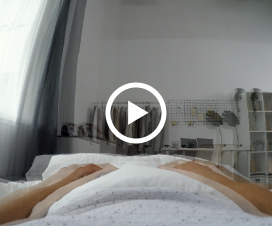
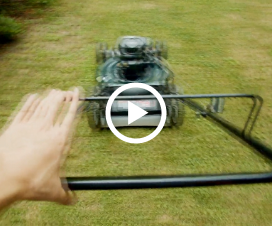
    While not all people with Thyroid Eye Disease (TED) will get double vision, those who do may have different types. Some people have double vision all the time (constant). Other people may have double vision that comes and goes. "Temporary" and "situational" double vision can come and go, and are caused by TED. Watch the videos below to see how these different types of double vision may appear.

    Temporary

    When waking up in the morning or when tired

    Situational

    When looking to the left or right or toward the corners of the eyes

    Constant

    Always noticeable

    Learn about the other symptoms of Thyroid Eye Disease

  • What are my options for paying for TEPEZZA?

    Out-of-pocket costs vary depending on your health insurance plan. Amgen By Your Side, a patient support program, is available to help you explore available financial support options.

    • Do you have commercial insurance, such as a preferred provider organization (PPO) or health maintenance organization (HMO)? Eligible commercially insured patients may pay as little as $0 out-of-pocket for each dose through the Amgen Commercial Co-Pay Program.*
    • Do you have government insurance, such as Medicare, Medicare Part D, Medicaid, Medigap, VA, CHAMPUS, Department of Defense, TRICARE, or any state patient, foundation, or other pharmaceutical program? If so, there may be other support for you.
    • No insurance? You still may have options for treatment coverage.

    Once you and your doctor decide TEPEZZA is right for you, our Amgen By Your Side staff is available to talk you through the insurance approval process and what your potential out-of-pocket treatment costs may be.

  • Is TEPEZZA covered by insurance?

    Coverage for TEPEZZA varies depending on your health insurance plan.

    • If you have commercial insurance, such as a preferred provider organization (PPO) or health maintenance organization (HMO), you may be eligible to pay as little as $0 out-of-pocket for both the cost of TEPEZZA and the IV infusion process through the Amgen Commercial Co-Pay Program*
    • If you have government insurance such as Medicare, Medicare Part D, Medicaid, Medigap, VA, CHAMPUS, Department of Defense, or TRICARE, other support may be available

    Once you and your doctor decide TEPEZZA is right for you, our Amgen By Your Side staff is available to talk you through the insurance approval process and what your potential out-of-pocket treatment costs may be.

  • Is TEPEZZA covered by Medicare?

    Coverage for patients with Medicare, Medicare Part D, Medicaid, Medigap, VA, CHAMPUS, Department of Defense, or TRICARE varies by state and individual. Once you and your doctor decide TEPEZZA is right for you, our Amgen By Your Side staff are available to review the insurance approval process and what your potential out-of-pocket treatment costs may be.

  • How many patients have been treated with TEPEZZA?

    Over 20,000 TED patients have been treated with TEPEZZA.

    Based on 24,132 individual patients enrolled in Amgen By Your Side who received at least one dose of TEPEZZA from 02/05/2020 - 08/23/2025. TED diagnosis is assumed based on initiation of TEPEZZA.

  • What are potential TEPEZZA side effects?

    The most common side effects of TEPEZZA include muscle cramps or spasms, nausea, hair loss, diarrhea, feeling tired, high blood sugar, hearing problems, taste changes, headache, dry skin, weight loss, nail problems, and changes in menstruation. Learn more about potential TEPEZZA side effects. Then watch a video from a TED Specialist about side effects.

    Always speak with your doctor about any side effects you may be experiencing.

  • How is TEPEZZA given and how long will I be on treatment?

    TEPEZZA is an IV (intravenous) medicine. This means it is delivered through a needle that is placed in your arm. The process of delivering an IV medicine is called an infusion.

    TEPEZZA is given as 1 infusion every 3 weeks, for a total of 8 infusions. So, completing TEPEZZA treatment takes about 5 months. Read more about how TEPEZZA is given.

    To get the full benefits, make sure you complete all 8 TEPEZZA infusions as prescribed by your doctor.

  • What should I expect during an infusion of TEPEZZA?

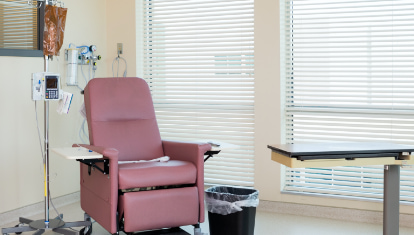
    Photo of a chair used for infusions Photo of a chair used for infusions Photo of a chair used for infusions

    You may receive TEPEZZA at an infusion center. This is a clinic that specializes in delivering IV medicines like TEPEZZA. You may also receive TEPEZZA in your doctor’s office, in a hospital, or in your own home. Talk to your doctor and your insurance provider about the right location for you.

    Typically, you’ll receive your TEPEZZA in an infusion chair, which is a cushioned armchair a lot like a recliner.

    There may be a TV to help you pass the time, or you can enjoy your own books, magazines, or your tablet or phone. There may be other patients nearby receiving medicines for many types of conditions, not just TED. Medical professionals, like nurses, at the infusion center are trained to look out for side effects, such as infusion reactions, and know how to handle them. They are also trained on the proper way to give IV medicines.

    The first 2 infusions of TEPEZZA will take about 90 minutes each to complete. Depending on how you react to the medicine, the next 6 infusions may be as short as 60 minutes. But taking into account time to check-in, have your vitals checked, and prepare the infusion, the total time will be longer.

    Learn more:

    What to expect during your first infusion

  • Because TEPEZZA is an infusion, is it like chemotherapy?

    While TEPEZZA and some chemotherapy treatments are both infusions, they are not the same type of medicine.

    There are many kinds of medicines that are infused to treat a variety of conditions. And infused medicines may be more common than you think; in fact, some antibiotics are infused. Infusions are also used to treat autoimmune conditions like Thyroid Eye Disease, psoriasis, rheumatoid arthritis, inflammatory bowel disease (IBD), and others.

  • When will I see improvement in my Thyroid Eye Disease symptoms?

    For some people in clinical studies, TEPEZZA worked quickly: some people began to see less eye bulging in as soon as 6 weeks (after 2 infusions). TEPEZZA took longer to work for some patients. It is important to know that in clinical studies, the eye bulging for people who saw results with TEPEZZA continued to get better through the full course of 8 infusions.

    See real before/after photos

  • Why is it important to receive all 8 infusions of TEPEZZA?

    The TEPEZZA clinical studies were designed for patients to receive 8 infusions.

    In a clinical study of recently diagnosed patients, more than 8 out of 10 patients who completed all 8 infusions of TEPEZZA had less eye bulging. Additionally, 7 out of 10 patients in the clinical studies had improvements in double vision. Patients also had less eye redness, pain, and swelling.

    To see how TEPEZZA may treat symptoms like these, click here.

    You may start to see some results with TEPEZZA before all 8 infusions are complete. But to get the full benefits of TEPEZZA treatment, you should finish all infusions as prescribed by your doctor.

    Learn more:

    What to expect when you take TEPEZZA

  • Is it safe to take TEPEZZA if I'm pregnant?

    You should not take TEPEZZA if you are pregnant because TEPEZZA may harm your unborn baby. Be sure to tell your doctor if you are pregnant or plan to become pregnant. If you can become pregnant, you should use an effective form of birth control (contraception) before you start TEPEZZA, during treatment, and for at least 6 months after your last TEPEZZA treatment.

    Before receiving TEPEZZA, tell your doctor if you are breastfeeding or plan to breastfeed. It is not known if TEPEZZA passes into your breast milk. Talk to your doctor about the best ways to feed your baby during treatment with TEPEZZA.

  • Can TEPEZZA cause hearing loss or hearing issues?

    In clinical studies, some patients experienced hearing issues. While hearing loss was a side effect experienced with TEPEZZA, “hearing issues” also refers to different types of less severe hearing problems. The types of hearing issues patients in the TEPEZZA clinical studies experienced were:.

    • Hyperacusis: becoming more sensitive to sounds, with some noises being painfully loud
    • Eustachian tube dysfunction: 1 or both ears feel like they are plugged with fluid
    • Hearing loss or deafness: a partial or total inability to hear sounds
    • Hypoacusis: a general term for hearing loss that can affect 1 or both ears. With hypoacusis, a person can still hear, but not as well as they usually can
    • Autophony: when it sounds like your own voice is too loud or echoing in your ears
    • Tinnitus: a ringing or buzzing sound in 1 or both ears
    Watch this video to learn more about hearing issues experienced in clinical studies, as well as the relationship between Thyroid Eye Disease and hearing issues.

    Always speak with your doctor about any side effects you may be experiencing.

After the second infusion, with each infusion, I did feel more and more relief. And after 8 infusions, when my doctor took the measurements, I could feel and see the difference in my eyes.

Jeanne-real-TEPEZZA-patient

Jeanne T., real TEPEZZA patient

IMPORTANT SAFETY INFORMATION

What is the most important information I should know about TEPEZZA?

Infusion reactions can happen during or within 24 hours after your infusion of TEPEZZA. If you have a reaction while receiving TEPEZZA, your doctor or nurse will slow or stop your infusion and treat your reaction. If you have a severe infusion reaction, your doctor may stop your treatment completely.

Tell your doctor or nurse right away if you have any of these symptoms during or after your treatment with TEPEZZA:
  • High blood pressure
  • Fast heartbeat
  • Redness of the face/Feeling hot
  • Difficulty breathing
  • Headache
  • Muscle pain

TEPEZZA may worsen inflammatory bowel disease (IBD), such as Crohn’s disease or ulcerative colitis, even if you don’t have a diagnosis of IBD before starting TEPEZZA treatment. Tell your doctor right away if you have worsening IBD symptoms, which may include diarrhea with stomach pain or cramps, blood in your stools, sudden urgency to have a bowel movement, or feeling like you need to have a bowel movement even when there’s little or no stool to pass.

TEPEZZA may cause an increase in your blood sugar. Before starting treatment with TEPEZZA, tell your doctor if you are currently being treated for diabetes, know your blood sugar is high, or have been diagnosed with diabetes. It is important for you to take your treatments and follow an appropriate diet for glucose control as prescribed by your doctor.

TEPEZZA may cause severe hearing problems including hearing loss, which in some cases may be permanent. Tell your doctor if you have any signs or symptoms of hearing problems or changes in hearing.

Before receiving TEPEZZA, tell your doctor if you:
  • Have inflammatory bowel disease (Crohn's disease or ulcerative colitis).
  • Are currently being treated for diabetes, have been diagnosed with diabetes, or know your blood sugar is high.
  • Are pregnant or plan to become pregnant. TEPEZZA may harm your unborn baby. Tell your doctor if you become pregnant or suspect you are pregnant during treatment with TEPEZZA.
    • Women who are able to become pregnant should use an effective form of birth control (contraception) prior to starting treatment, during treatment and for at least 6 months after the final dose of TEPEZZA.
  • Are breastfeeding or plan to breastfeed. It is not known if TEPEZZA passes into your breast milk. Talk to your doctor about the best ways to feed your baby during treatment with TEPEZZA.
  • Tell your doctor about all the medicines you take, including prescription and over-the-counter medicines, vitamins, dietary and herbal supplements. Know the medicines you take. Keep a list of them to show your doctor and pharmacist when you get a new medicine.
What are the possible side effects of TEPEZZA?

The most common side effects of TEPEZZA include muscle cramps or spasms, nausea, hair loss, diarrhea, feeling tired, high blood sugar, hearing problems, taste changes, headache, dry skin, ear discomfort, weight loss, nail problems, and changes in menstruation.

This is not a complete list of all possible side effects. Tell your doctor or treatment team about any side effect you may have.

You are encouraged to report negative side effects of prescription drugs to the FDA. Visit www.fda.gov/safety/medwatch, or call 1-800-FDA-1088.
Please see Full Prescribing Information or visit TEPEZZA.com for more information.

USE

TEPEZZA is a prescription medicine used to treat Thyroid Eye Disease (TED), no matter if you’ve had TED for months or years.

IMPORTANT SAFETY INFORMATION

What is the most important information I should know about TEPEZZA?

Infusion reactions can happen during or within 24 hours after your infusion of TEPEZZA. If you have a reaction while receiving TEPEZZA, your doctor or nurse will slow or stop your infusion and treat your reaction. If you have a severe infusion reaction, your doctor may stop your treatment completely.