Please ensure JavaScript is enabled for purposes of website accessibility Thyroid Eye Disease vs. Graves' Disease | TEPEZZA® (teprotumumab-trbw)
chat-icon

Questions about TED or TEPEZZA® (teprotumumab-trbw)? Join us for
a live, online event with a TED Eye Specialist and TEPEZZA Patient!

P-TEP-US-01062 04/23

Questions about TED or TEPEZZA?
Call a Nurse Advocate at: 1-833-483-7399

Thyroid Eye Disease vs Graves’ Disease

Thyroid Eye Disease and Graves’ disease are different and need different treatments

Thyroid Eye Disease (TED) can be confused with a separate condition called Graves’ disease.

There are a few reasons for this. One reason is that TED and Graves’ disease are both autoimmune conditions. Normally, the immune system can tell the difference between your healthy cells and bad cells, like bacteria or viruses. But with an autoimmune disease, the immune system mistakenly attacks healthy cells and parts of your body. With Graves’ disease, the immune system attacks the thyroid. In TED, the immune system attacks the muscle and fat tissue behind the eyes. Autoimmune diseases are chronic, or lifelong, conditions.

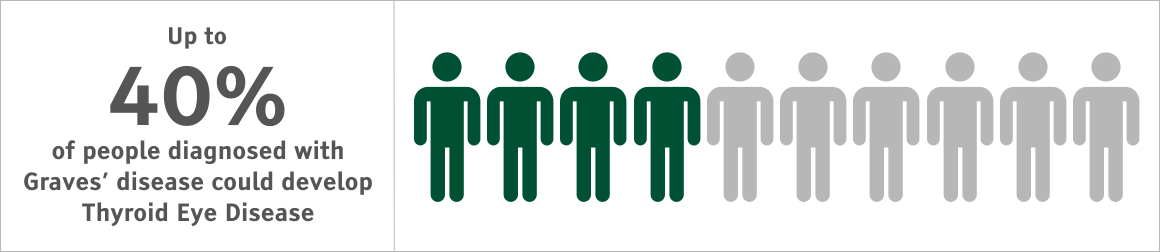
The fact that people with Graves’ disease often develop TED also causes confusion.

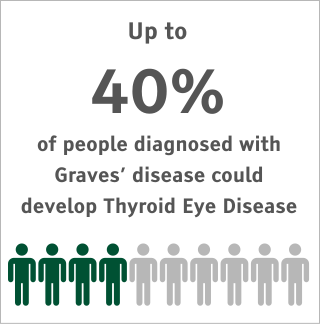
Graphic displaying statistic that up to 5 out of 10 people with Graves' disease may develop Thyroid Eye Disease Graphic displaying statistic that up to 5 out of 10 people with Graves' disease may develop Thyroid Eye Disease

However, a person can develop TED without having Graves’ disease.

Additionally, doctors may use a number of different names for TED. Some of these even contain the word Graves’. If you read or hear any of these terms used, they mean Thyroid Eye Disease:

  • Graves’ orbitopathy
  • Graves’ ophthalmopathy
  • Graves’ eye disease
  • Graves’ disease eyes
  • Thyroid-associated ophthalmopathy

Treatment for Graves’ disease won’t work for Thyroid Eye Disease (TED), and treatment for TED won’t work for Graves’ disease. This is why it is important to ask your doctor about a treatment for TED, like TEPEZZA.

Thyroid Eye Disease vs Graves’ disease

Thyroid Eye Disease Graves' disease

Area of body affected

Front and back of the eyes

Thyroid (a gland at the bottom of your neck in front of your windpipe)

What’s going on inside the body

Muscle and fat tissue behind and around the eye become inflamed

The thyroid becomes overactive, also known as hyperthyroidism

Common symptoms

  • Dry, gritty eyes
  • Sensitivity to light
  • Eyelid redness and swelling
  • Itchy eyes
  • Eye pain, including pain around and behind the eye
  • Watery, teary eyes
  • Bulging eyes
  • Double vision
  • Other vision changes

Get a more complete list of Thyroid Eye Disease symptoms.

  • Fast heartbeat
  • Irritability
  • Anxiety
  • Tiredness
  • Too much sweating, sensitivity to temperature
  • Unhealthy weight loss

Doctors

Ophthalmologists who have advanced training usually treat TED

Endocrinologists usually treat Graves’ disease

Area of body affected
Thyroid Eye Disease
Front and back of the eyes
Graves' disease
Thyroid (a gland at the bottom of your neck in front of your windpipe)
What’s going on inside the body
Thyroid Eye Disease
Muscle and fat tissue behind and around the eye become inflamed
Graves' disease
The thyroid becomes overactive, also known as hyperthyroidism
Common symptoms
Thyroid Eye Disease
  • Dry, gritty eyes
  • Sensitivity to light
  • Eyelid redness and swelling
  • Itchy eyes
  • Eye pain, including pain around and behind the eye
  • Watery, teary eyes
  • Bulging eyes
  • Double vision
  • Other vision changes

Get a more complete list of Thyroid Eye Disease symptoms

Graves' disease
  • Fast heartbeat
  • Irritability
  • Anxiety
  • Tiredness
  • Too much sweating, sensitivity to temperature
  • Unhealthy weight loss
Doctors
Thyroid Eye Disease
Graves' disease
Endocrinologists usually treat Graves’ disease
TED Eye Specialist finder icon

Find a TED Specialist

Not all doctors are familiar with diagnosing and treating TED. Look for a TED Specialist in your area who has experience treating TED.

IMPORTANT SAFETY INFORMATION

What is the most important information I should know about TEPEZZA?

Infusion reactions can happen during or within 24 hours after your infusion of TEPEZZA. If you have a reaction while receiving TEPEZZA, your doctor or nurse will slow or stop your infusion and treat your reaction. If you have a severe infusion reaction, your doctor may stop your treatment completely.

Tell your doctor or nurse right away if you have any of these symptoms during or after your treatment with TEPEZZA:
  • High blood pressure
  • Fast heartbeat
  • Redness of the face/Feeling hot
  • Difficulty breathing
  • Headache
  • Muscle pain

TEPEZZA may worsen inflammatory bowel disease (IBD), such as Crohn’s disease or ulcerative colitis, even if you don’t have a diagnosis of IBD before starting TEPEZZA treatment. Tell your doctor right away if you have worsening IBD symptoms, which may include diarrhea with stomach pain or cramps, blood in your stools, sudden urgency to have a bowel movement, or feeling like you need to have a bowel movement even when there’s little or no stool to pass.

TEPEZZA may cause an increase in your blood sugar. Before starting treatment with TEPEZZA, tell your doctor if you are currently being treated for diabetes, know your blood sugar is high, or have been diagnosed with diabetes. It is important for you to take your treatments and follow an appropriate diet for glucose control as prescribed by your doctor.

TEPEZZA may cause severe hearing problems including hearing loss, which in some cases may be permanent. Tell your doctor if you have any signs or symptoms of hearing problems or changes in hearing.

Before receiving TEPEZZA, tell your doctor if you:
  • Have inflammatory bowel disease (Crohn's disease or ulcerative colitis).
  • Are currently being treated for diabetes, have been diagnosed with diabetes, or know your blood sugar is high.
  • Are pregnant or plan to become pregnant. TEPEZZA may harm your unborn baby. Tell your doctor if you become pregnant or suspect you are pregnant during treatment with TEPEZZA.
    • Women who are able to become pregnant should use an effective form of birth control (contraception) prior to starting treatment, during treatment and for at least 6 months after the final dose of TEPEZZA.
  • Are breastfeeding or plan to breastfeed. It is not known if TEPEZZA passes into your breast milk. Talk to your doctor about the best ways to feed your baby during treatment with TEPEZZA.
  • Tell your doctor about all the medicines you take, including prescription and over-the-counter medicines, vitamins, dietary and herbal supplements. Know the medicines you take. Keep a list of them to show your doctor and pharmacist when you get a new medicine.
What are the possible side effects of TEPEZZA?

The most common side effects of TEPEZZA include muscle cramps or spasms, nausea, hair loss, diarrhea, feeling tired, high blood sugar, hearing problems, taste changes, headache, dry skin, ear discomfort, weight loss, nail problems, and changes in menstruation.

This is not a complete list of all possible side effects. Tell your doctor or treatment team about any side effect you may have.

You are encouraged to report negative side effects of prescription drugs to the FDA. Visit www.fda.gov/safety/medwatch, or call 1-800-FDA-1088.
Please see Full Prescribing Information or visit TEPEZZA.com for more information.

USE

TEPEZZA is a prescription medicine used to treat Thyroid Eye Disease (TED), no matter if you’ve had TED for months or years.

IMPORTANT SAFETY INFORMATION

What is the most important information I should know about TEPEZZA?

Infusion reactions can happen during or within 24 hours after your infusion of TEPEZZA. If you have a reaction while receiving TEPEZZA, your doctor or nurse will slow or stop your infusion and treat your reaction. If you have a severe infusion reaction, your doctor may stop your treatment completely.